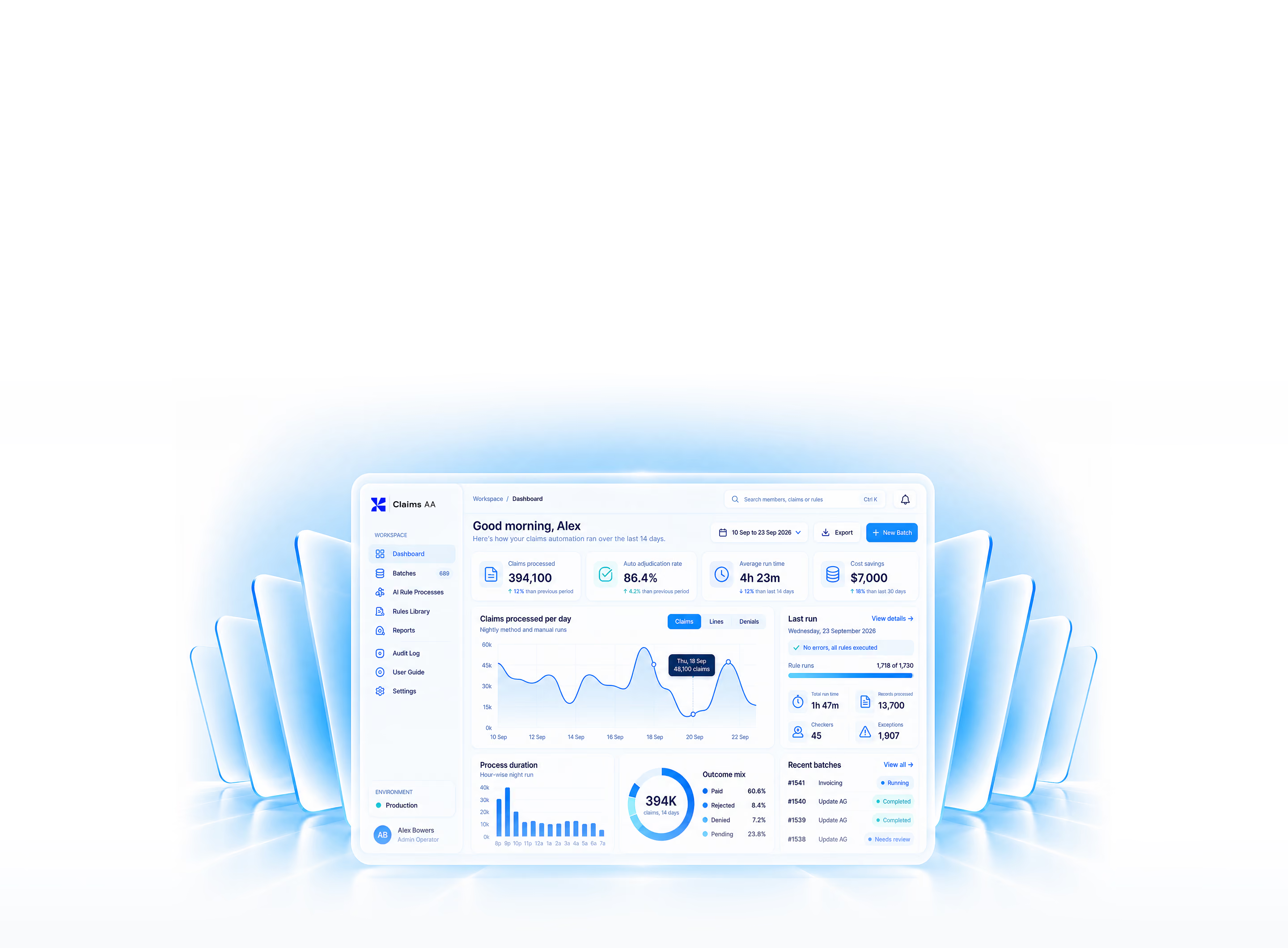
When Claims Adjudication Falls Outside Automation, Cost Scales & Speed Tumbles.
Most systems automate the common cases. Everything else becomes manual, creating backlogs, inconsistency, and rising cost. Claims Auto Adjudication is batch based and extends automation to edge cases, so you can scale without the overhead.


Adjudication Gaps Multiply at Scale. Complexity Just Exposes It Faster.
Every new contract, workflow variation, and payer rule creates another exception path the core system cannot fully handle.
Manual intervention fills the gap. Spreadsheets multiply. Custom scripts fail. Queues expand. What starts as operational overhead becomes systemic backlog and financial leakage.
"The issue is not isolated process failure. It’s that healthcare operations generate complexity core systems were never designed to absorb consistently at scale.”




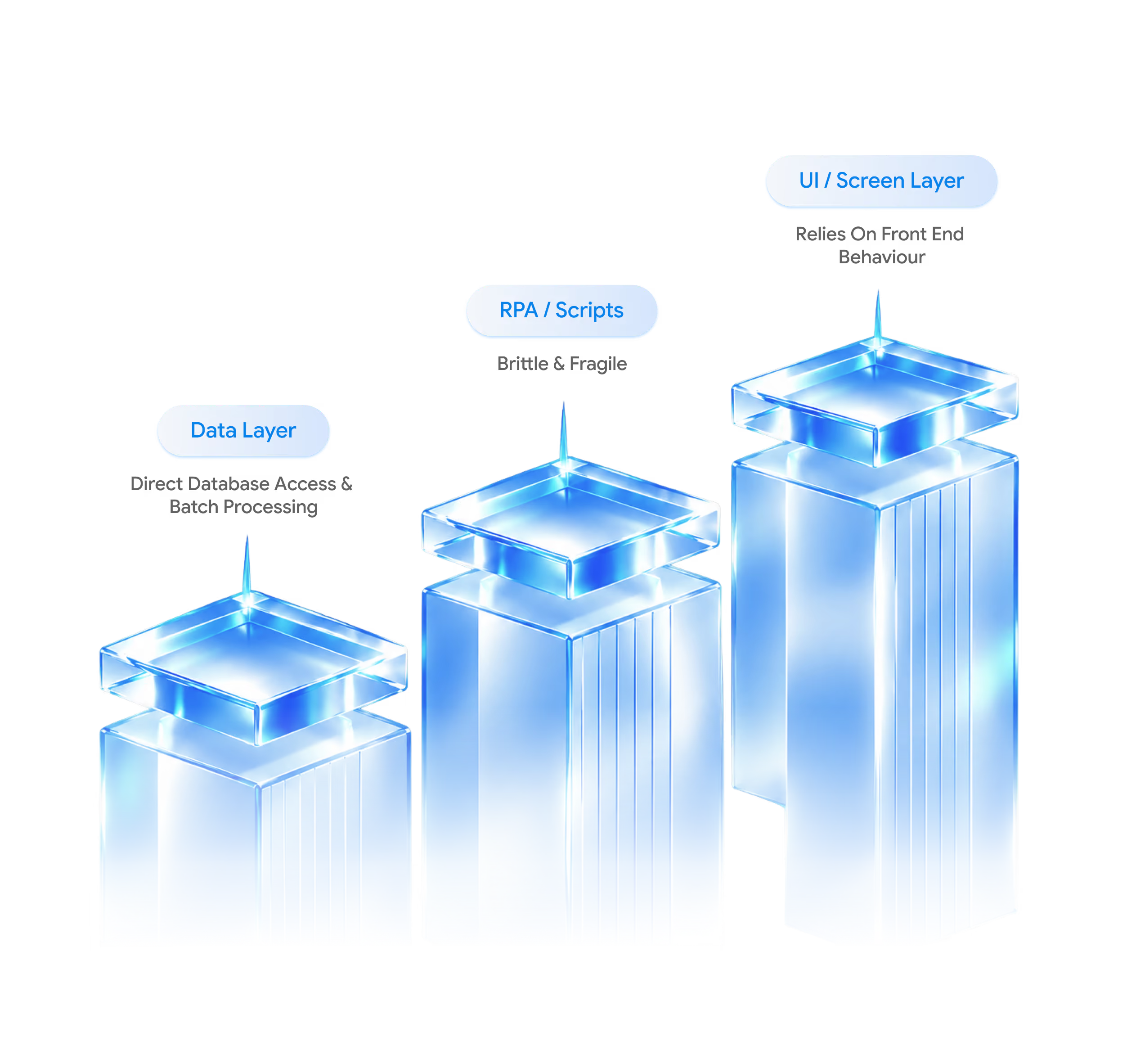
Built at the Data Layer, Not the UI, So It Scales.
Most healthcare automation depends on brittle scripts and screen-level workflows layered on top of legacy systems.
Claims Auto Adjudication operates directly at the database layer, in a batch manner, eliminating dependency on front-end behavior, reducing manual intervention, and maintaining consistent high-volume processing even as operational complexity grows.
No screen simulation. No fragile RPA stacks. No operational slowdowns caused by system change.

The Claims Auto Adjudication Workflow
Six steps. From product activation to verified result.







Activate a pipeline automatically in multiple modes.
 Connect
 to one or more databases and run the pipeline
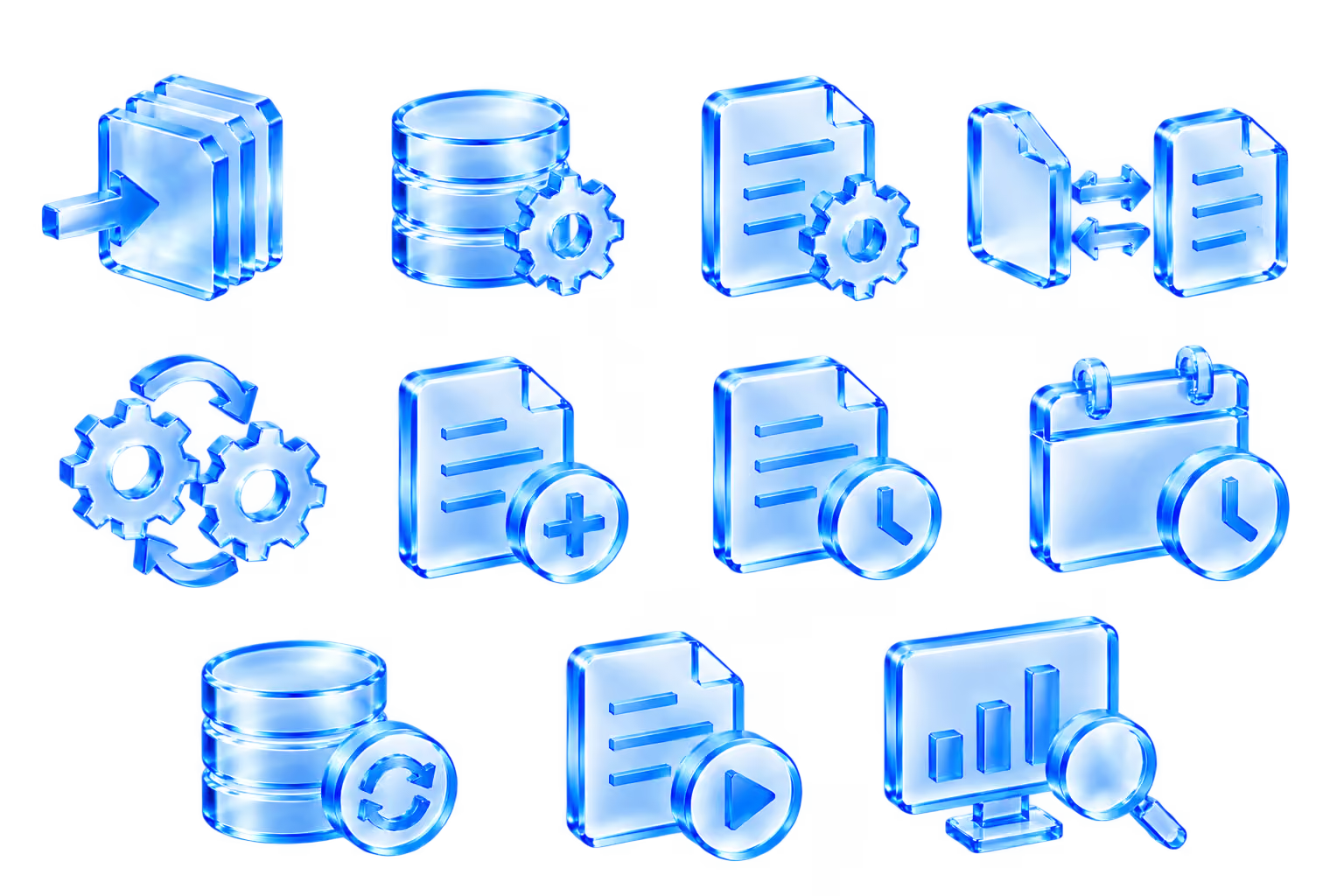
Select specific claims to act on by using a series of configurable inclusion and exclusion criteria
Perform simple/complex/condition actions based on instructions specified.
 Observe
 the data after making the changes and log/capture for reporting and compliance purposes.
 Notify
If any issues occurred or whether the execution was smooth.

Built for the
Full Adjudication Cycle.
Purpose built capabilities covering every stage of medical claims adjudication, from bulk processing to denial recovery.
High-Speed Bulk Processing
Scheduled or on-demand bulk adjudication at 400 claims and 800 claim lines per minute. Designed for the volume that healthcare operations generate, without requiring continuous system load.
Rule Library
Pre-built rules covering eligibility denials, duplicates, authorization matching, bundled services, and non-covered services. Rules live in structured database tables for easy customization. Improves first-pass resolution rates by 40%.
Authorization Matching
Automates the matching of authorizations by verifying that medical services rendered are authorized as per payer guidelines before treatment. Eliminates the most common upstream denial cause by focusing on authorization verification and not downstream claims payment.
Reprice and Reprocess
Automatically reprocess paid claims and reprice open claims to correct overpayments, underpayments, and fee schedule adjustments. Fully compliant with contract-specific pricing rules. Audit-ready at every step.
Flexible Scheduling
Daily automation or manual triggers across systems. Run overnight to avoid production system load during business hours or trigger on-demand for urgent processing requirements. No continuous system load required.
Resilient Execution
Script sequencing, automatic recovery from timeouts and reboots, and zero re-runs. Enterprise-grade stability that does not require manual intervention to resume after an interruption.
Complete Auditability
Automated audit trails track every action taken during the claims process. Full transparency at every stage: what was processed, when, by which rule, and with what result. Audit readiness is built in, not bolted on.
Regulatory Compliance
Claims processed in full compliance with current industry standards and payer guidelines. Regular compliance checks built into the processing cycle to mitigate risk and simplify audits. No separate compliance layer required.
Connects to the Systems Already in Your Environment.

Eligibility verification connector for real-time and batch eligibility checks integrated directly into the adjudication workflow.

Pre-built connector for Microdyne integration within the adjudication processing environment.

Connectors for DRG, APC, and APR-DRG grouping. Integrated directly into the claims processing workflow for accurate grouper-based adjudication.

Real-time and batch edit connector for PCG Virtual Examiner, supporting clinical and coding edits within the adjudication cycle.
Built for Operations Team Under Constant Exception Pressure.
Designed for Teams Handling High-Volume Exceptions

Claims Operations
Automate repetitive exceptions, shrink queues, and stop backlog buildup as claim volumes rise. Your team stays focused on fast, accurate adjudication without getting bogged down by manual fixes.

Claims Leadership
Scale claims operations without scaling operational overhead.
Gain consistent adjudication outcomes, lower rework rates, and tighter operational control across fragmented processing environments.

Compliance & Audit
Gain full traceability across adjudication decisions without relying on manual reconstruction of records and workflows. Every determination is documented, consistent, and audit-ready by default.
Financial Operations
Plug hidden financial leaks from manual rework, unresolved exceptions, and erratic adjudication. Get clear visibility into operational costs and their direct impact on your bottom line.



Hear What Our Customers
Say About Us


Having worked with Key Software since 2018, I've consistently valued their understanding of our business and commitment to delivering results. Their responsiveness, dependable support, and ability to meet expectations make them a trusted technology partner.
What sets Key Software apart is their ability to bridge technical expertise with real business needs. Their team approaches challenges with a solution-focused mindset, collaborates closely with our stakeholders, and consistently delivers improvements that support our evolving operations.
Key Software has helped us improve the efficiency of our claims and utilization management operations. Their ability to understand complex workflows and translate business requirements into practical solutions has made a meaningful difference in our day-to-day operations.
Key Software's DOFR solution has transformed how we manage and evaluate contractual responsibilities. We now have greater visibility into contract performance, with processes that once required weeks of manual effort running automatically.

Frequently Asked Questions.
Everything you need to know before evaluating Claims Auto Adjudication for your organization.
No. Claims Auto Adjudication layers onto your existing claims environment. It automates the adjudication processes that your current system handles manually or through workarounds, without requiring changes to the core platform.
No, and that is by design. Because processing speed is high, claims are adjudicated on a scheduled basis, typically overnight, without loading production systems during business hours. On-demand processing is also available for urgent requirements.
Rules are configured in structured database tables based on your specific payer policies, contract terms, and business requirements. The pre-built rule library covers the most common adjudication scenarios. Flexible to develop custom rules for logic that falls outside the standard library.
Implementation typically runs three to six months depending on the complexity of the adjudication rules and the existing claims environment. Client involvement is structured and bounded throughout.
Month-to-month licensing. No upfront capital expenditure. No multi-year contract required to begin.
